How to Succeed in Your First 30 Days in a Remote Job
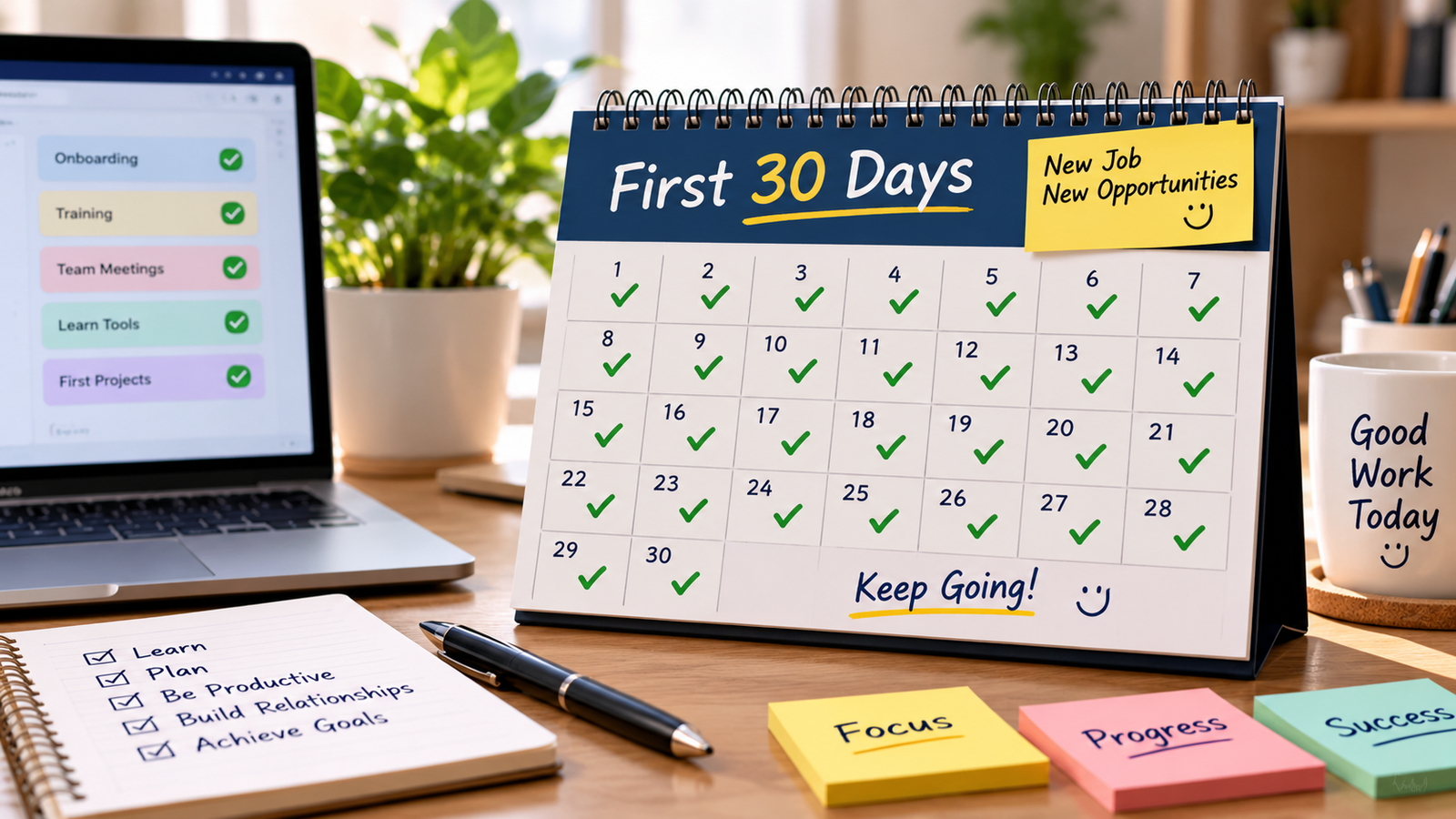
Introduction
Starting a new remote job can be exciting, but the first few weeks may also feel challenging. You are learning new responsibilities, meeting unfamiliar colleagues, understanding company procedures, and adapting to a work environment that may operate entirely through digital communication.
Unlike a traditional office, a remote workplace does not always provide opportunities to observe how colleagues work or ask quick questions in person. You may need to be more intentional about communication, organization, and building professional relationships.
The first 30 days are an important opportunity to establish good habits, understand expectations, and demonstrate that you can work independently while remaining connected to your team.
You do not need to know everything immediately. What matters most is showing curiosity, reliability, professionalism, and a willingness to learn.
This guide explains how to approach your first month in a remote position, from your first day to the end of your initial 30 days.
Before Your First Day: Prepare for Success
Preparation can make your transition into a new remote position much easier.
Before your start date, review any instructions provided by your employer and make sure you have the equipment and access needed to perform your responsibilities.
Prepare Your Home Office
Choose a quiet and comfortable place where you can concentrate.
You do not necessarily need an expensive office setup. A functional workspace should include:
- A reliable computer suitable for your responsibilities.
- A stable internet connection.
- A comfortable chair and appropriate desk.
- Adequate lighting.
- Headphones or a headset for virtual meetings.
- A notebook or digital tool for recording important information.
If you need ideas for creating an affordable workspace, read our guide on How to Set Up a Home Office on a Budget.
Test Your Technology
Before beginning work, confirm that you can access the systems and communication tools required by your employer.
Depending on the position, these may include:
- Company email.
- Google Workspace or Microsoft 365.
- Slack or Microsoft Teams.
- Zoom or Google Meet.
- Project management platforms such as Trello, Asana, or similar tools.
- Company-specific software and internal systems.
Test your microphone, camera, internet connection, and any required applications.
If you encounter technical problems, communicate them promptly rather than waiting until they interfere with your responsibilities.
Understand Your Schedule and Availability
Remote companies do not all follow the same schedule.
Some operate within traditional business hours, while others offer flexible schedules or work across multiple time zones.
Before your first day, clarify:
- Your expected working hours.
- Your time zone and any required overlap with colleagues.
- Break policies.
- Meeting expectations.
- How to report availability.
- The procedures for requesting time off.
Understanding these details helps prevent misunderstandings during your first weeks.
Days 1–7: Learn the Company and Understand Expectations
Your first week should focus primarily on learning.
Resist the temptation to prove yourself by accepting every task or trying to change processes immediately. First, understand how the company operates.
1. Meet Your Manager and Team Members
Pay attention during introductions and onboarding meetings.
Learn who is responsible for different activities and identify the people you may need to contact when questions arise.
It is useful to understand:
- Who manages your daily responsibilities.
- Who can answer technical questions.
- How tasks are assigned.
- How the team communicates.
- Which channels should be used for urgent matters.
You do not need to memorize every name and responsibility immediately. Keep a simple reference document for important contacts and procedures.
2. Clarify Your Job Responsibilities
Ask your manager to explain your main responsibilities and the priorities for your first month.
Try to understand what successful performance looks like in your position.
Useful questions include:
- What are my most important responsibilities?
- Which tasks should I prioritize during the first week?
- How will my performance be evaluated?
- What should I do when I encounter a problem?
- Are there specific procedures I should follow when completing tasks?
Clear expectations help you focus your energy on work that matters.
3. Learn the Communication Rules
Every remote company has its own communication habits.
Some teams rely heavily on instant messaging, while others prefer email, project management platforms, or scheduled meetings.
Observe how colleagues communicate and follow established procedures.
For example:
- Use the appropriate channel for different types of questions.
- Keep messages clear and professional.
- Provide context when requesting assistance.
- Acknowledge important messages.
- Avoid unnecessary interruptions.
- Communicate delays as early as possible.
Remember that colleagues cannot always see whether you are available or working on a particular task. Clear communication helps everyone coordinate their activities.
4. Take Notes During Onboarding
Your first week may include a large amount of information.
Instead of trying to remember everything, maintain organized notes about:
- Company procedures.
- Important contacts.
- Software instructions.
- Recurring responsibilities.
- Deadlines.
- Meeting schedules.
- Common questions and solutions.
A personal onboarding document can become a useful reference as you become more independent.
5. Observe Before Suggesting Changes
Even if you have previous professional experience, take time to understand the existing workflow.
Learn why the team follows particular procedures before suggesting alternatives.
Demonstrating respect for established processes helps you build credibility.
Days 8–14: Build Your Routine and Demonstrate Reliability
During the second week, you should begin becoming more comfortable with your responsibilities.
Your priority is to establish a consistent work routine and show that you can manage assigned tasks responsibly.
1. Organize Your Daily Schedule
Create a realistic schedule based on your working hours and the demands of your position.
Your day might include:
- Reviewing messages and priorities at the beginning of the day.
- Planning the tasks that require the most concentration.
- Participating in scheduled meetings.
- Completing assigned responsibilities.
- Providing progress updates.
- Reviewing unfinished tasks before signing off.
Avoid filling every minute of your schedule with meetings or administrative activities.
Allow enough time for focused work and unexpected requests.
For additional guidance, see our article on How to Create a Daily Routine When Working From Home.
2. Establish Good Time Management Habits
Your manager needs to know that you can manage responsibilities without constant supervision.
Use a calendar, task list, or project management application to organize deadlines.
A useful approach is to divide tasks into three groups:
- High priority: tasks that must be completed first.
- Medium priority: important tasks with some scheduling flexibility.
- Low priority: activities that can be completed when more urgent work is finished.
If a deadline seems unrealistic, communicate early and discuss priorities.
3. Ask Questions at the Right Time
Asking questions is part of learning a new position.
However, try to gather relevant information before asking for assistance.
For example, instead of sending a message saying that you cannot complete a task, explain what you have already tried and identify the specific difficulty.
This demonstrates initiative and makes it easier for colleagues to help you.
4. Provide Clear Progress Updates
Do not assume that your manager knows what you are working on.
When appropriate, provide concise updates describing:
- What you have completed.
- What you are currently working on.
- Whether you have encountered obstacles.
- Whether you need additional information.
- What you expect to complete next.
Progress updates should be useful rather than excessive.
Days 15–21: Strengthen Communication and Build Trust
By the third week, you should have a better understanding of your responsibilities and the company workflow.
Now it is time to strengthen your professional relationships and become a more dependable member of the team.
1. Develop Positive Working Relationships
Remote work does not eliminate the importance of professional relationships.
Take advantage of appropriate opportunities to interact with colleagues.
You can build relationships by:
- Participating constructively in meetings.
- Responding respectfully to messages.
- Offering assistance when appropriate.
- Sharing useful information.
- Recognizing the contributions of other team members.
You do not need to participate in every informal conversation. Be friendly and professional while respecting different communication styles.
2. Improve Your Written Communication
In a distributed team, written communication often replaces conversations that would happen naturally in an office.
Before sending a message, check whether it includes the information the recipient needs.
A good professional message should be:
- Clear.
- Concise.
- Respectful.
- Relevant.
- Easy to understand.
For example, instead of writing:
I have a problem with the report. Can you help?
You could write:
I have completed the first section of the report, but I need clarification about the data required for the final section. Could you confirm which reporting format I should use?
The second message provides useful context and makes it easier for the recipient to respond.
3. Learn to Work With Different Communication Styles
Some colleagues prefer detailed written explanations. Others prefer short messages or scheduled conversations.
Pay attention to how your team shares information.
When working across time zones, remember that an immediate response may not always be possible.
Use clear messages and respect established working hours.
4. Deliver Consistent Results
Reliability is one of the most valuable qualities you can demonstrate as a remote employee.
Complete assignments carefully, meet agreed deadlines, and communicate whenever priorities change.
If you make a mistake, acknowledge it, explain how you intend to correct it, and learn from the experience.
Building trust is usually the result of consistent behavior rather than one impressive achievement.
Days 22–30: Demonstrate Progress and Prepare for the Next Stage
During the final week of your first month, review what you have learned and identify areas where you can improve.
You should have a clearer understanding of your responsibilities, communication procedures, and performance expectations.
1. Review Your Accomplishments
Consider what you have completed during your first month.
Examples may include:
- Completing required onboarding activities.
- Learning company systems.
- Understanding internal procedures.
- Completing initial assignments.
- Meeting important deadlines.
- Establishing communication routines.
- Developing positive working relationships.
Record these accomplishments so that you can discuss your progress with your manager.
2. Request Feedback
Do not wait for a formal performance review to discover whether you are meeting expectations.
Ask your manager for feedback when appropriate.
Useful questions include:
- Am I meeting the expectations for my position?
- Which areas should I continue improving?
- Are there responsibilities I should begin handling more independently?
- What should be my priorities during the next month?
Show that you are willing to learn and apply constructive feedback.
3. Identify Skills You Should Develop
Your first month will probably reveal areas where additional training could improve your performance.
You may need to improve your knowledge of:
- Company software.
- Industry terminology.
- Customer communication.
- Technical processes.
- Project management.
- Time management.
- Written communication.
Choose practical learning goals that relate directly to your responsibilities.
4. Discuss Your Next Priorities
Toward the end of the first month, try to understand what comes next.
Ask your manager about upcoming projects, performance expectations, and opportunities to take on additional responsibilities.
The objective is to move from the onboarding stage toward greater independence and consistent contribution.
Common Mistakes to Avoid During Your First Month
Even capable professionals can encounter difficulties when adapting to a new remote position.
Here are some common mistakes and ways to avoid them.
Trying to Prove Yourself by Working Excessive Hours
Working longer does not automatically mean producing better results.
Respect your agreed schedule and focus on completing responsibilities effectively.
Regularly working beyond expected hours may create unhealthy habits and unrealistic expectations.
Staying Silent When You Need Help
Some new employees hesitate to ask questions because they want to appear independent.
However, remaining silent when you are confused can lead to avoidable errors.
Ask reasonable questions and provide context about what you have already attempted.
Ignoring Communication
When colleagues cannot see you working, they may depend on messages and progress updates to understand the status of shared tasks.
Communicate important developments and report potential delays.
Participating Too Little in Meetings
You do not need to dominate every discussion.
However, listen carefully, ask relevant questions, and contribute when your responsibilities or knowledge can help the team.
Making Changes Before Understanding the Workflow
Avoid criticizing company procedures before understanding why they exist.
Learn the current process first. Later, when you have sufficient context, you can suggest improvements constructively.
Neglecting Work-Life Boundaries
Remote work can make it difficult to separate professional responsibilities from personal time.
Establish a consistent work schedule and take appropriate breaks.
Our guide on How to Stay Productive When Working From Home offers additional ideas for maintaining focus without sacrificing personal well-being.
A Practical 30-Day Remote Job Checklist
Use this checklist to evaluate your progress during your first month.
Before Starting
- Confirm your start date and working hours.
- Prepare your computer and home office.
- Test the internet connection and required applications.
- Review the onboarding instructions.
- Confirm how to contact your manager.
During the First Week
- Meet your manager and team members.
- Understand your main responsibilities.
- Learn the communication procedures.
- Attend onboarding meetings.
- Organize notes and important information.
During the Second Week
- Establish a daily work routine.
- Organize tasks and deadlines.
- Ask questions when necessary.
- Provide appropriate progress updates.
- Become more familiar with company tools.
During the Third Week
- Strengthen professional relationships.
- Improve written communication.
- Complete assignments consistently.
- Identify areas where you need additional guidance.
- Demonstrate accountability.
During the Fourth Week
- Review your accomplishments.
- Request constructive feedback.
- Identify skills to develop.
- Clarify your next priorities.
- Discuss opportunities for greater responsibility.
Frequently Asked Questions
What should I do during my first week in a remote job?
Focus on understanding your responsibilities, meeting your colleagues, learning company systems, and clarifying expectations. Your first week should establish a foundation for successful work rather than involve rushing through unfamiliar tasks.
How can I make a good impression in my first 30 days?
Be dependable, communicate clearly, meet agreed deadlines, ask thoughtful questions, and demonstrate a willingness to learn. Consistency is often more valuable than trying to impress everyone immediately.
How often should I communicate with my manager?
Follow the communication expectations established by your company. Some managers prefer daily updates, while others use weekly check-ins or project management platforms. Clarify the preferred method early.
What if I make a mistake during my first month?
Mistakes can happen when learning new procedures. Acknowledge the problem, communicate promptly, correct it when possible, and take steps to avoid repeating it.
Should I ask for feedback before the end of my first month?
Yes. Constructive feedback can help you identify misunderstandings and improve your performance before they become larger problems. You do not need to wait for a formal evaluation.
How can I stay motivated when working remotely?
Maintain a regular schedule, organize your responsibilities, take appropriate breaks, communicate with colleagues, and create a workspace that supports concentration. Setting realistic daily goals can also help you maintain momentum.
Final Thoughts
Your first 30 days in a remote job are an opportunity to establish habits that will support your professional development.
You do not need to become an expert in every company process immediately. Focus on learning, communicating effectively, understanding expectations, and delivering consistent results.
Build professional relationships, remain organized, and demonstrate accountability in the way you approach your responsibilities.
Most importantly, remember that successful remote work depends on more than completing tasks. It also requires trust, communication, adaptability, and the ability to contribute to a team even when everyone works from different locations.
A thoughtful first month can provide a strong foundation for a productive and rewarding remote career.
If you are preparing for a remote position, explore our guide on How to Write a Cover Letter for a Remote Job and our practical advice on How to Create a Daily Routine When Working From Home.