How to Set Up a Home Office on a Budget
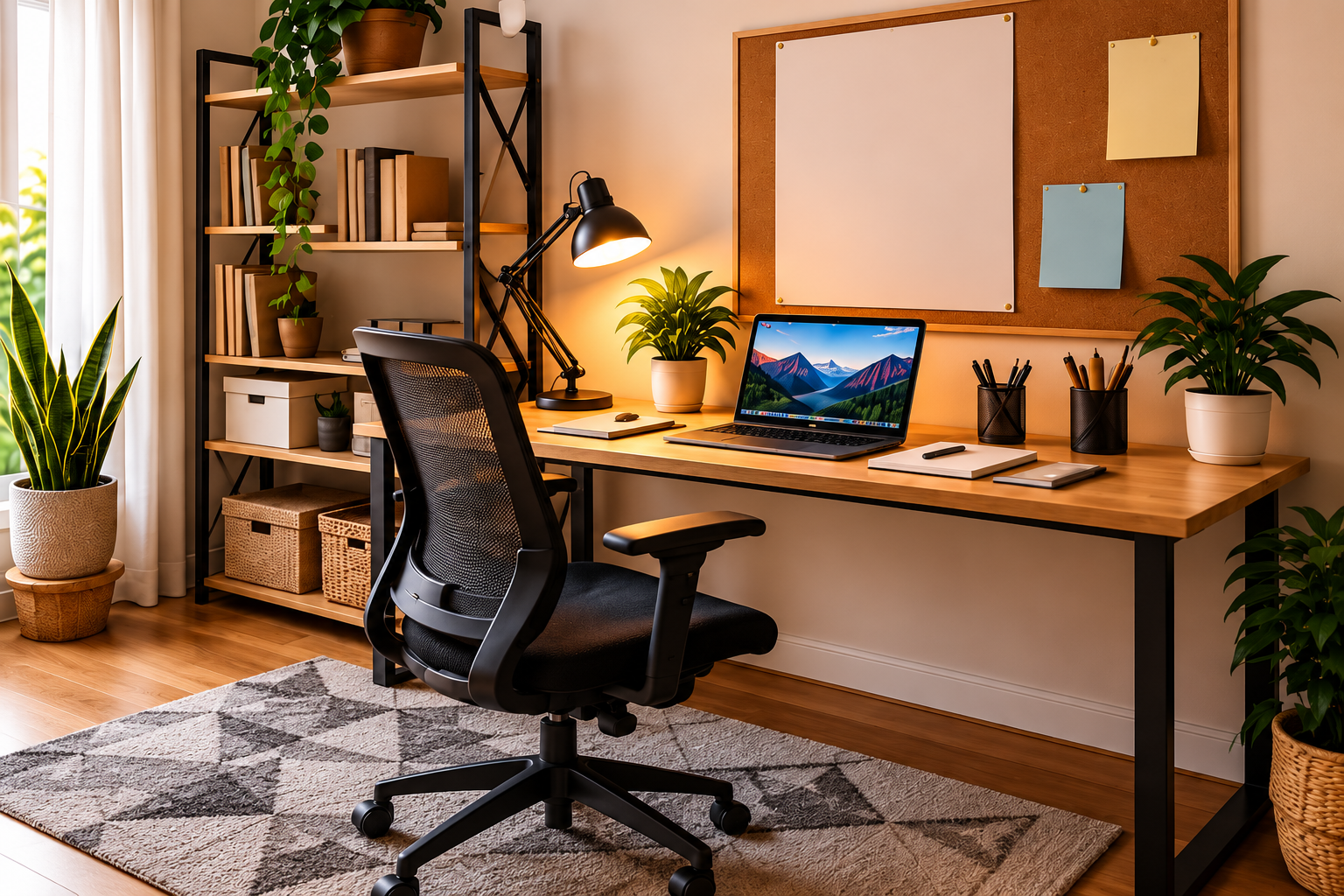
Creating a comfortable home office does not have to be expensive. Whether you are starting your first remote job or improving your current workspace, a few smart choices can help you build a productive environment without spending too much money.
Why a Home Office Matters
Having a dedicated workspace can help you stay focused, organized, and productive. You do not need a separate room or expensive equipment to get started. Even a small corner of your bedroom or living room can become a functional workspace.
1. Choose the Right Location
Choose a quiet area with good lighting, enough space, reliable internet access, and privacy. If possible, avoid working from your bed.
2. Choose Affordable Furniture
A simple, sturdy table may be enough. Look for a comfortable chair that supports your back. Use inexpensive shelves, storage boxes, folders, or containers you already own.
3. Improve Lighting Without Spending Much
Place your desk near a window if possible. A basic desk lamp can help when natural light is limited. Position the light to reduce screen glare.
4. Organize Your Workspace
Remove items you rarely use, organize documents, store cables neatly, and keep essential supplies nearby.
5. Use Equipment You Already Own
Check what you already have before buying new technology. Purchase additional equipment only when necessary for your work.
6. Keep Your Internet Connection Reliable
Test your connection where you plan to work. If the signal is weak, try moving closer to the router or using an Ethernet cable when practical.
7. Create a Productive Daily Routine
Set regular working hours when possible, list daily priorities, take breaks, and reduce distractions.
8. Avoid Unnecessary Expenses
Compare prices and consider secondhand furniture. Prioritize items that improve comfort, organization, or productivity. Ask your employer whether required equipment is provided.
9. Home Office Checklist
- Choose a quiet location.
- Find a suitable desk and supportive chair.
- Check lighting and internet access.
- Organize supplies and documents.
- Identify equipment required for your job.
- Set a daily routine.
- Compare prices before buying extras.
Final Thoughts
Setting up a home office on a budget is possible with careful planning. Use what you already own, choose practical furniture, and purchase additional equipment only when necessary. Your workspace does not have to be expensive; it should help you work comfortably, stay organized, and build a productive remote-work routine.
Explore other WorkPathly guides to prepare for and succeed in remote work.