How to Identify and Avoid Remote Job Scams
Introduction
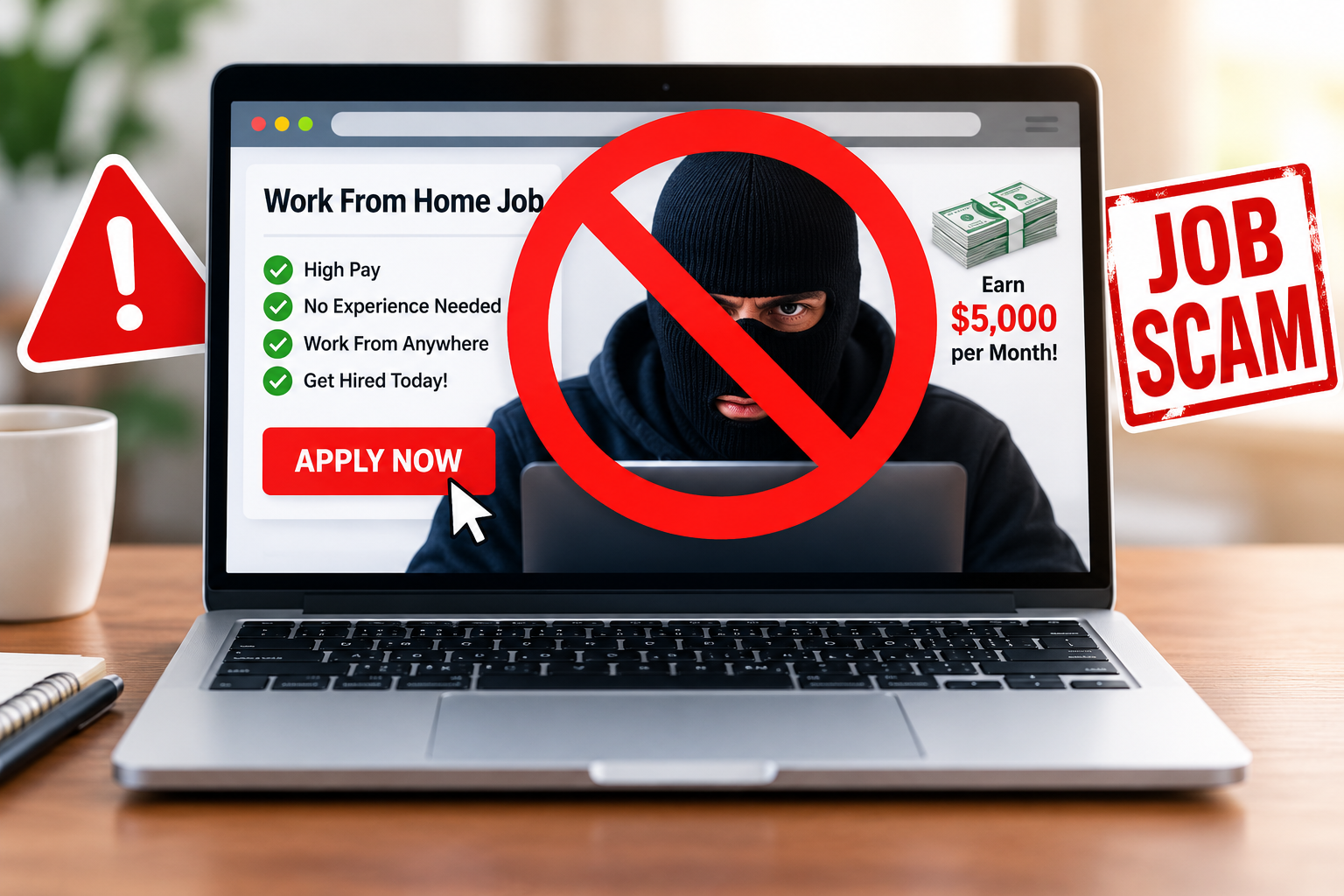
Working remotely offers flexibility and access to opportunities across many industries. However, the growing interest in work-from-home jobs has also created opportunities for scammers to target job seekers.
Fraudulent recruiters and fake employers may advertise attractive salaries, promise quick hiring decisions, or claim that you can earn money with little experience. Some imitate real companies, use professional-looking websites, and send convincing messages to make their offers appear legitimate.
The Federal Trade Commission (FTC) warns that work-from-home scams can be designed to steal money, obtain personal information, or persuade applicants to pay for training and equipment they never receive.
The good news is that you can reduce your risk by learning how these scams operate and knowing what to check before accepting an offer.
This guide explains the most common warning signs and provides practical steps to help you conduct a safer remote job search.
1. Recognize the Most Common Warning Signs
Not every unusual job advertisement is fraudulent, but certain warning signs deserve careful attention. If an opportunity includes several of the following characteristics, pause and investigate before proceeding.
Unrealistic Salary Promises
Be cautious of advertisements promising unusually high earnings for simple tasks, minimal hours, or no relevant skills.
For example, a listing might claim that you can earn thousands of dollars every month by performing basic data entry for just a few minutes a day.
Legitimate remote jobs can offer competitive compensation, but employers generally explain the responsibilities, qualifications, working hours, and compensation structure.
Before applying, compare the advertised pay with similar positions and examine what the job actually requires.
Requests for Upfront Payments
One of the clearest warning signs is a request to pay money to obtain a job.
A suspicious recruiter might ask you to purchase a starter kit, pay a registration fee, buy mandatory training, or pay for access to an exclusive list of vacancies.
Legitimate employers do not require applicants to pay them to secure employment. Although some professions have legitimate licensing or certification costs, those expenses should be independently verified and should not be confused with paying a recruiter for a promised job.
Never send money simply because someone claims that payment will guarantee your hiring.
Pressure to Accept Immediately
Scammers may tell you that a position is available only for the next few minutes or that you must pay a fee immediately to reserve your place.
This pressure is intended to discourage you from checking the employer's identity or discussing the offer with someone you trust.
A genuine hiring process should allow you reasonable time to review the position, ask questions, and understand the employment terms.
Vague Job Descriptions
Be suspicious when an advertisement promises attractive earnings but provides little information about the actual work.
Before proceeding, look for clear answers to these questions:
- What tasks will you perform?
- Who is the employer?
- What skills or qualifications are required?
- How will your performance be evaluated?
- How and when will you be paid?
If the recruiter avoids these questions or continually changes the explanation, investigate further.
2. Verify the Company and Recruiter
Scammers sometimes impersonate well-known businesses or invent company names to appear trustworthy. A professional logo, a convincing website, or a familiar brand name does not prove that a job offer is genuine.
Visit the Company's Official Website
Search for the company independently rather than relying only on a link supplied by the recruiter.
Look for the company's official careers page and search for the exact job title or reference number. If the position is not listed, contact the company through contact information published on its official website to ask whether the vacancy is genuine.
Keep in mind that not every legitimate opening will appear on a public careers page, particularly when a company uses an external recruiter. In that situation, independently verify the recruiter and the employer's relationship.
Check the Recruiter's Email Address
Recruiters working for established companies commonly use corporate email addresses associated with the employer's official domain.
An address from a free email service does not automatically prove fraud, especially for a small business, but it deserves additional scrutiny when the sender claims to represent a large corporation.
Watch for subtle changes in domain names, misspellings, extra characters, and addresses that imitate a company's real identity.
Do not assume an email is genuine simply because it contains the company's logo or signature.
Search for Complaints and Scam Reports
Search the company's name and the recruiter's name alongside terms such as:
- scam
- complaint
- fraud
- fake job offer
- reviews
Look for independent information from multiple sources. Be careful with anonymous testimonials and reviews that make extraordinary claims about income or hiring success.
The absence of negative reviews does not guarantee that an employer is legitimate, particularly if the company or recruiter is new.
3. Be Careful With Personal and Financial Information
Employers eventually need certain information to establish employment, verify eligibility, and arrange payroll. The important question is when and how that information is requested.
A suspicious recruiter may request your Social Security number, driver's license, banking details, or other sensitive information before conducting a meaningful interview or verifying your identity.
Avoid providing sensitive information to an unverified person or through an unfamiliar website.
Before submitting employment paperwork:
- Verify the employer and the job offer independently.
- Confirm that you are communicating through an authentic company channel.
- Read the privacy and security information on the application platform.
- Provide only the information necessary for the legitimate hiring stage.
- Avoid sending identity documents through unsolicited messages or unverified chat accounts.
Never share passwords, one-time security codes, or account login credentials with a recruiter.
If a company requests sensitive information early in the process, ask why it is needed and verify the request directly with the employer.
4. Watch Out for Fake Check and Equipment Scams
Some fraudulent employers send applicants a check and claim that the money will cover computers, office equipment, or other supplies needed for remote work.
They may instruct the applicant to deposit the check, purchase equipment from a designated vendor, or send part of the money to another person.
The check may initially appear to clear, but it can later be identified as fraudulent. The bank may then require you to repay the deposited amount, while the money you sent to the scammer is difficult or impossible to recover.
Never deposit a suspicious check and send money back to the supposed employer.
Do not purchase equipment from a vendor selected by an unverified recruiter or use your own money based on a promise of reimbursement.
If equipment is required, independently confirm the company's policy and the identity of the person authorizing the purchase.
5. Understand Task Scams and Fake Online Work
Not every remote job scam resembles a traditional job interview. Some begin with unexpected text messages, WhatsApp messages, Telegram invitations, or social media advertisements.
These offers may promise payment for simple activities such as:
- Liking videos or rating products.
- Completing repetitive online tasks.
- Improving product rankings.
- Performing supposed app-optimization activities.
- Clicking links or completing assignments through an unfamiliar platform.
The scammer may display a growing balance in an app or even send a small initial payment to gain your trust.
Later, you may be told to deposit your own money, sometimes in cryptocurrency, to unlock additional tasks or withdraw your supposed earnings.
The displayed balance may be entirely fictitious.
A crucial warning sign is being asked to pay money to access earnings you supposedly have already made. Do not deposit money to unlock tasks or release a balance.
Read the FTC guidance on how to spot and avoid task scams.
6. Be Cautious With Interviews Conducted Only Through Messaging Apps
Remote interviews often take place online, and legitimate employers may use video conferencing, email, or other communication platforms.
However, a hiring process conducted entirely through text messages or a messaging app deserves additional verification, especially if the recruiter immediately offers you a job without discussing your qualifications.
Watch for situations in which:
- The recruiter refuses to identify the hiring manager.
- The interview consists of only a few generic questions.
- You receive an offer before the employer evaluates your skills.
- The recruiter asks for bank information before the job is verified.
- The person refuses to communicate through the company's official channels.
Messaging apps are not proof of fraud by themselves. The concern is the combination of an unverifiable recruiter, an unusual hiring process, and requests for money or sensitive information.
Verify the opportunity directly with the company before moving forward.
7. Create a Safer Remote Job Search Routine
You do not need to avoid remote work opportunities to protect yourself. Instead, develop a consistent process for evaluating each vacancy.
Step 1: Use Reputable Job Search Sources
Start with established job boards, professional networks, and employers' official careers pages.
Even reputable platforms can contain fraudulent advertisements, so treat every individual listing as something to verify.
Step 2: Read the Full Job Description
Check the duties, qualifications, location restrictions, compensation, and employment arrangement.
Remember that remote does not necessarily mean work from anywhere. Some employers accept applications only from people located in the United States or in specific states.
Step 3: Research Before Responding
Confirm the employer's identity and look for the vacancy on an official website.
If you receive an unexpected offer, do not click suspicious links or reply simply because the message looks professional.
Step 4: Keep Records of Your Applications
Maintain a simple spreadsheet with the company name, job title, official listing URL, application date, recruiter contact information, and interview status.
This helps you distinguish legitimate applications from unexpected messages and makes it easier to identify inconsistencies.
Step 5: Trust Evidence, Not Promises
A high salary, flexible schedule, impressive logo, or enthusiastic testimonial is not sufficient evidence that a job is genuine.
Evaluate the employer's identity, the responsibilities, the hiring process, and the terms of employment before making a decision.
8. What to Do If You Encounter a Remote Job Scam
If you suspect that an offer is fraudulent, stop communicating until you have verified the situation.
If you have already shared information or sent money, take action as soon as possible.
- If you sent money: Contact your bank, payment provider, or cryptocurrency platform immediately. Ask whether the transaction can be stopped, reversed, or otherwise addressed.
- If you deposited a suspicious check: Contact your bank and explain what happened. Do not spend the money or send additional funds.
- If you shared account credentials: Change affected passwords immediately, enable multifactor authentication, and review account activity.
- If you shared identity information: Visit IdentityTheft.gov for guidance on identity theft and recovery steps.
- If you encountered a fraudulent job offer: Report it to the Federal Trade Commission at ReportFraud.ftc.gov and to the platform where you found it.
Preserve relevant messages, emails, receipts, payment records, and screenshots. These records may help when reporting the incident.
Do not feel embarrassed if you have been targeted. Scammers can imitate legitimate companies and use sophisticated tactics. Acting quickly can help limit further damage.
Final Thoughts: Protect Yourself While Searching for Remote Work
Remote employment can provide valuable opportunities, but finding a legitimate position requires patience and careful evaluation.
Research the company, verify the recruiter, read the job description, and protect your personal information. Never pay someone for the promise of a job, and never send money back from a check provided by an unverified employer.
Most importantly, do not let the excitement of a promising offer pressure you into making a rushed decision.
A trustworthy job opportunity should withstand reasonable questions and independent verification.
At WorkPathly, our goal is to help job seekers make informed decisions, discover remote-work opportunities, and build a more confident job search strategy. Take the time to verify each opportunity before applying, and prioritize employers whose identity and hiring process you can confirm.
Sources and References
- Federal Trade Commission (FTC) — How to Avoid Work-from-Home Job Scams
- Federal Trade Commission (FTC) — Job Scams
- Federal Trade Commission (FTC) — How to Spot and Avoid Task Scams
- Federal Trade Commission (FTC) — Report Fraud
- IdentityTheft.gov — Identity Theft Recovery Resources
WorkPathly provides educational information to help readers make informed job-search decisions. Readers should independently verify employers and job offers before sharing personal information or making payments.